Discover
CARASSAI — FROM ANCIENT ORIGINS TO MEDIEVAL CHARM
Carassai tells a thousand-year-old story. The earliest settlements in the area date back to the Neolithic period, with numerous artefacts preserved in the Municipal Antiquarium, originating from sites such as Rocca Monte Varmine, the necropolis of Sant’Agata, and agricultural lands along the Aso River and the Menocchia stream.
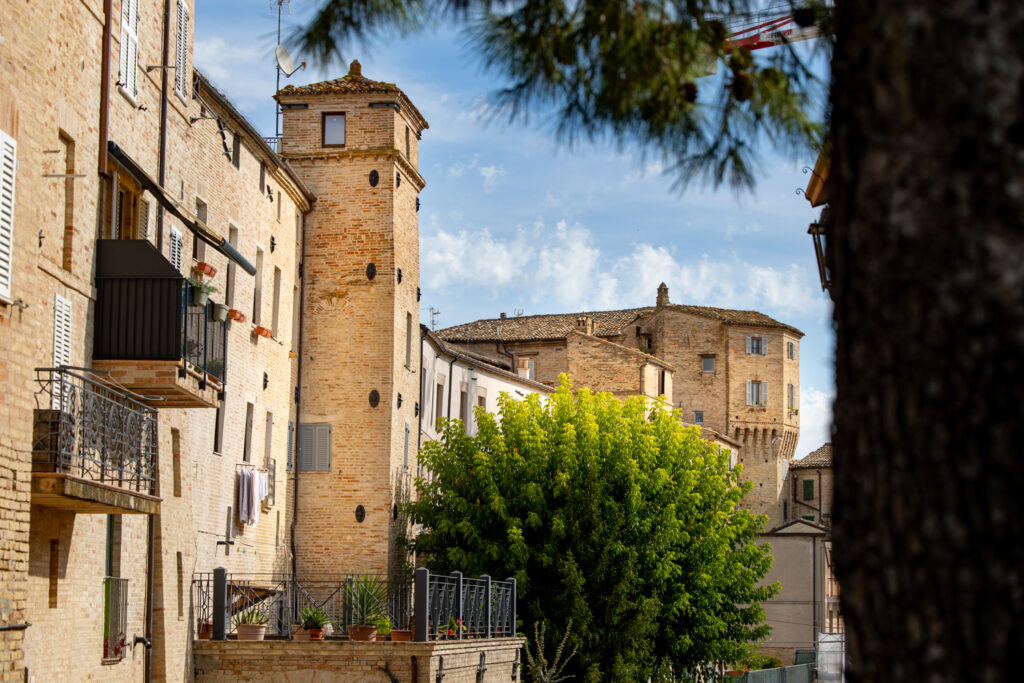
During the Middle Ages, Benedictine monks played a key role in the development of Carassai, fostering land reclamation and the creation of religious and defensive structures. The village took shape around the New Castle, built between the 14th and 15th centuries, featuring fortified walls, towers, and covered walkways that still testify to its military vocation. Thanks to its strategic position on the ridge between the Aso River and the Menocchia stream, Carassai became an important point of control and exchange between nearby cities and valleys, maintaining a significant role over the centuries within the defensive and commercial network of the Fermo area.
In the following centuries, Carassai experienced phases of autonomy, rule under Fermo, and reconstruction after wartime events. It became a free municipality in 1537 and obtained full administrative autonomy only after the unification of Italy in 1860. In the 20th century, public services were expanded, including the library, schools, infrastructure, and even a regional railway.
Today, the village preserves the New Castle with its walls, towers, and walkways—an architectural testimony to its strategic importance. Close to the historic center stand the Church of Santa Maria del Buon Gesù, a splendid example of Renaissance and Baroque art, and the medieval castle of Monte Varmine, perched on a hill and still intact in its original structure, with a crenellated tower and imposing walls: an ideal vantage point over the surrounding valleys and the Sibillini Mountains.
TRADITIONS, CULTURE AND FLAVORS
Carassai preserves a rich heritage of traditions passed down from generation to generation.
Its gastronomy reflects the authentic soul of the Marche region: local cured meats such as ciauscolo and coppa, pecorino cheeses, homemade egg pasta, rustic peasant soups, and festive desserts like ciambelle al mosto. The wines produced on the surrounding hills—Rosso Piceno, Passerina, and Pecorino—and the local extra-virgin olive oil complete the experience, pairing each dish with genuine, full-bodied flavors.